Top Materials for Building a Custom Home in San Diego, CA
Choosing the right materials for your custom home is one of the most important steps in the building process. From wood, steel, and concrete to stucco, brick, and eco-friendly options, each material offers unique benefits for durability, energy efficiency, and design. In San Diego, climate and lifestyle play a big role in material selection, and it pays to balance aesthetics with long-term performance. This guide walks through the top materials for custom homes, their pros and cons, and how your choices affect cost, comfort, and value.
Keep in mind that the ranges here are starting points only. What you actually pay depends on your design, site conditions, complexity, market rates, commodity prices, and timing. The only way to get a real number is to have your plans set and go out to bid.
What Are The Top Materials for Building a Custom Home?
The top materials used in building custom homes are:
Wood
Steel
Concrete
Brick
Stucco
Sustainable Materials
Wood
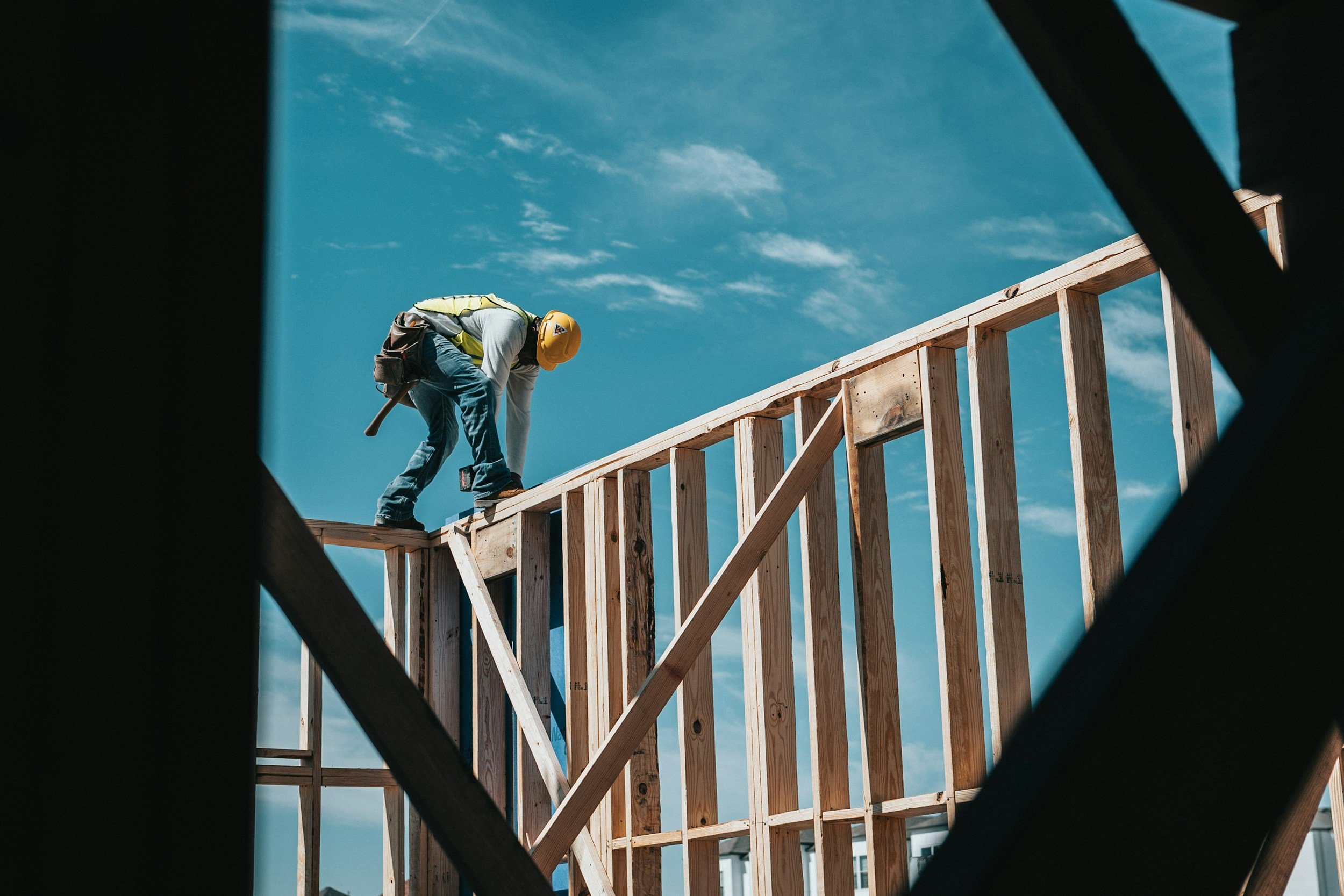
Wood is a traditional building material used for framing, flooring, and finishing, and it remains the most common choice in San Diego custom home construction. Framing is not priced as a material cost per SF of the home. A complete framing package, meaning lumber material plus framing labor, typically runs $150,000 to $220,000 for a 3,000 SF home based on executed San Diego County projects. That number moves around depending on complexity, story count, and roof geometry. Two-story homes carry more labor than single-story builds because of the stair, landing, and upper floor framing. A simple rectangular footprint also costs a lot less to frame than a complex multi-wing design. Lumber follows commodity pricing with a lag, so always get a current bid once you have plans in hand.
Pros:
Flexible and easy to work with for custom designs
Warm and natural aesthetic appeal
Generally more affordable upfront than steel or concrete systems
Cons:
Can warp, rot, or be damaged by moisture
Susceptible to termites and pests in San Diego's climate. Budget for treatment from day one
Requires regular maintenance
Steel
Steel shows up in custom homes primarily for structural support and moment frames, not as a framing system. The challenge with pricing steel is that even a small amount of it gets expensive fast. It is a separate trade from stick framing and carries a high roll-on cost because of fabrication, delivery, and crane time. Most structural engineers working on San Diego custom homes will work to achieve required spans with engineered lumber like LVL or PSL beams before putting steel on the drawings. When steel is unavoidable, expect even the smallest scope to start at $25,000 to $50,000 and go up from there depending on what the plans require. Steel also adds schedule risk because fabrication and delivery lead times can stretch a build by weeks and require tight coordination between the fabricator and framing crew.
Pros:
Extremely durable and long-lasting
Resistant to pests, mold, and fire
Strong structural support for modern designs and long spans
Cons:
High cost compared to engineered lumber alternatives
Conducts heat, which affects energy efficiency if not insulated properly
Adds schedule and coordination complexity to residential projects
Concrete
Concrete is used for foundations, walls, and floors and is valued for its durability and long lifespan. On a basic flat lot, slab costs typically run $12 to $20 per square foot depending on thickness, reinforcement, and soil conditions. That range only applies to straightforward sites. Hillside sites with engineered slab systems, deeper footings, undocumented fill, or expansive soils go well beyond that. On executed San Diego County hillside custom home projects, foundation and footing costs for a 3,000 SF home have run $120,000 to $150,000 depending on home complexity. Clients routinely underestimate the gap between a basic flat-lot slab and an engineered hillside foundation system. Always get a soils report and foundation design before budgeting concrete on any sloped site.
Pros:
Excellent durability and weather resistance
Low maintenance and long lifespan
Strong structural performance when properly engineered
Cons:
Higher upfront construction cost on complex hillside sites
Limited design flexibility without specialized techniques
Requires reinforced foundations and careful engineering on hillside lots
Brick
Brick is a traditional masonry material made from clay or concrete and is commonly associated with exterior walls and finishes. In San Diego custom home construction, full brick walls are rarely used. California's seismic requirements make solid brick walls a liability, and the weight and labor intensity make them cost-prohibitive for most residential projects. Clients who like the brick look typically get there through stone veneer or thin brick veneer, which performs better in seismic conditions, is substantially lighter, and goes over standard wood-framed walls without issue. Brick veneer typically runs $10 to $20 per square foot installed and is used as an accent rather than a primary cladding system in San Diego.
Pros:
Classic and timeless look that adds curb appeal
Resistant to fire and weather
Minimal maintenance with a long lifespan when used as veneer
Cons:
Full brick walls are not well suited to San Diego's seismic conditions
Labor-intensive installation process
Heavier than most alternative cladding systems, with structural implications on wood-framed buildings
Stucco
Stucco is the dominant exterior finish in San Diego custom home construction. It is a cement-based plaster applied to exterior walls and works well in Southern California's dry climate. A proper three-coat stucco system typically runs $15 to $20 per square foot of exterior wall area depending on complexity, finish, and color. On a 3,000 SF San Diego custom home, executed project data shows total stucco packages running $45,000 to $80,000 depending on the exterior wall area and finish spec. Proper installation really matters here. The waterproofing layers behind the stucco are what protect the building envelope, and moisture intrusion behind improperly installed stucco is one of the most common and expensive defect claims in coastal zones. Always confirm your contractor is using a three-coat system with a proper moisture barrier. Hardie board-and-batten is an increasingly popular alternative, particularly in fire-prone areas, and runs similarly at $60,000 to $90,000 on a 3,000 SF home depending on profile complexity.
Pros:
Common in Southern California and well-suited for warm climates
Provides a smooth, modern, or Mediterranean-style finish
Energy-efficient and resistant to fire
Cons:
Can crack over time if not installed correctly
Requires skilled labor for proper moisture barrier integration
Not ideal for areas with heavy rainfall or freezing temperatures
Sustainable Materials (Eco-Friendly Options)
Sustainable materials include recycled, renewable, or energy-efficient products like bamboo flooring, reclaimed wood, or green insulation. Costs can range from a few hundred dollars to hundreds of thousands depending on what you select. The more important thing to know in California is that sustainability is not just a preference, it is baked into the building code. Title 24 energy compliance sets minimum performance standards for insulation, windows, mechanical systems, and ventilation on all new construction. Every new San Diego custom home needs to budget for HERS energy testing ($1,500 to $2,000), a whole-house ERV or ventilation system ($1,000 to $2,000), and EV charging infrastructure ($4,000 to $5,500 for two Level 2 chargers plus solar conduit stub). These are not optional upgrades. They are code minimums that apply no matter what materials you choose.
Pros:
Reduces environmental impact with recycled or renewable resources
Improves energy efficiency with green insulation or solar-ready features
Can increase long-term home value
Cons:
Higher upfront costs depending on the material
Limited availability in some areas
May require specialized builders or contractors
How to Choose The Best Materials for Building a Custom Home

Choosing the right materials for a custom home comes down to balancing budget, style, durability, and climate. Start by figuring out what matters most to you, whether that is energy efficiency, low maintenance, or a specific architectural style. Think about how each material performs where you are building. Stucco and Hardie board-and-batten both hold up well in Southern California's dry climate and work in fire-prone areas. Make sure cost ranges fit your budget and remember that some sustainable options cost more upfront but pay off over time. Work closely with your architect or builder to compare options, look at samples, and understand how different materials affect the look and longevity of your home. In San Diego County, always check your parcel's fire zone designation before locking in any exterior material. Very High Fire Hazard Severity Zone requirements can significantly narrow your choices.
Top Roof Materials
Roof materials protect the home from weather and contribute to its overall style. In San Diego County, fire zone requirements heavily influence what you can use. Much of the county falls within Very High Fire Hazard Severity Zones where Class A fire-rated roofing is required by code. Check your parcel's fire zone before specifying any roofing material. Roof geometry also drives cost in a big way. A simple two-pitch gable costs a lot less per SF than a complex hip-and-valley plan at the same tile spec.
Asphalt Shingles
Pros: Affordable, easy to install, many colors and styles
Cons: Shorter lifespan (15 to 30 years), not permitted in San Diego's fire zones, less durable in heat
Cost Range: $10 to $20 per square foot installed
San Diego Note: Asphalt shingles are rarely used in San Diego custom home construction and may not be permitted on your parcel. Confirm fire zone requirements before specifying.
Clay or Concrete Tiles
Pros: Long-lasting (50+ years), fire-resistant, ideal for hot climates
Cons: Heavy, higher upfront cost, may require reinforced structure
Cost Range: $15 to $25 per square foot installed. On executed San Diego County custom home projects, concrete tile packages for a 3,000 SF home have run $35,000 to $50,000 depending on roof complexity. A simpler two-pitch gable costs meaningfully less than a complex hip-and-valley plan at the same spec.
San Diego Note: Concrete tile is the dominant roofing material in San Diego custom home construction. Flat-profile concrete tile is increasingly popular in contemporary homes because it looks more modern while keeping full fire resistance.
Metal Roofing
Pros: Extremely durable (40 to 70 years), low maintenance, energy-efficient
Cons: Higher cost, requires proper insulation for noise control
Cost Range: $30 to $50 per square foot installed for standing seam metal
San Diego Note: In coastal San Diego, specify a Kynar or PVDF finish coating to resist salt air corrosion. Complex rooflines with multiple valleys push toward the top of this range.
Slate Roofing
Pros: Extremely durable (75 to 100+ years), fireproof, high-end look
Cons: Very heavy, very expensive, requires specialized installation and structural reinforcement
Cost Range: $40 to $75 per square foot installed
Synthetic Roofing
Pros: Lightweight, durable, lower cost than natural slate or wood
Cons: May not have the same long-term value as natural materials. Verify fire rating for San Diego fire zones
Cost Range: $10 to $20 per square foot installed
Top Flooring Materials
Flooring covers the interior surfaces people walk on and affects comfort, style, and how much maintenance you are signing up for. In a mid-luxury San Diego custom home, the typical approach is engineered hardwood on the main living level, LVP in secondary rooms, and carpet in bedrooms. Based on executed projects, a complete flooring package at mid-luxury spec for a 3,000 SF home runs about $15,000 in material and $8,000 in labor. How much of the home gets hardwood versus LVP or carpet drives total flooring cost more than the grade of material you pick.
Hardwood
Pros: Classic, durable, adds home value
Cons: Can scratch or dent, higher cost, sensitive to moisture
Cost Range: $8 to $20 per square foot installed. Engineered hardwood is strongly preferred over solid hardwood in San Diego's coastal and near-coastal areas because it handles moisture significantly better.
Laminate
Pros: Affordable, easy to install, looks like wood
Cons: Less durable than real wood, can warp with moisture
Cost Range: $3 to $10 per square foot installed
Tile (Ceramic, Porcelain, Stone)
Pros: Durable, water-resistant, many design options
Cons: Cold underfoot, can crack if heavy objects fall
Cost Range: $10 to $20 per square foot installed for standard format. Large-format tile (24x48 or larger) used in mid-luxury San Diego custom homes typically runs $15 to $30 per square foot installed once you account for substrate prep, waterproofing, and the extra labor that large format work requires.
Carpet
Pros: Comfortable, warm, noise-reducing
Cons: Stains easily, higher maintenance, shorter lifespan
Cost Range: $5 to $10 per square foot installed
Vinyl / Luxury Vinyl Plank (LVP)
Pros: Water-resistant, affordable, easy to clean
Cons: Can dent or tear, may fade in direct San Diego sunlight. Specify UV-stable commercial grade if the space gets significant sun exposure
Cost Range: $5 to $10 per square foot installed. LVP is the entry-level flooring spec in San Diego custom home construction and is typically used in secondary spaces rather than primary living areas at mid-luxury and above.
Bamboo
Pros: Sustainable, eco-friendly, attractive
Cons: Can scratch or dent, sensitive to moisture
Cost Range: $5 to $10 per square foot installed
Concrete
Pros: Durable, modern look, can be polished or stained
Cons: Hard underfoot, cold without radiant heating
Cost Range: $15 to $25 per square foot installed
Top Insulation & Energy Efficiency Materials
Insulation helps regulate temperature, improve energy efficiency, and reduce noise in custom homes. In California, Title 24 energy compliance sets minimum R-values for walls, ceilings, and floors, and your energy consultant's compliance report will tell you exactly what is required for your climate zone. Do not spec insulation type or R-value before getting that report. On executed San Diego County custom home projects, total insulation packages for a 3,000 SF cost starts at $15,000 to $20,000 for standard fiberglass spec and step up to $25,000 - $40,000 for a spray foam upgrade.
Fiberglass Batts
Pros: Affordable, widely available, easy to install
Cons: Can leave gaps if not installed correctly, may not meet Title 24 targets without supplemental strategies
Cost Range: start at $2 to $5 per square foot of house installed
Spray Foam
Pros: Excellent air sealing, high R-value, long-lasting. Increasingly the preferred choice in San Diego custom homes for unvented roof assemblies and tight building envelopes
Cons: Higher upfront cost, requires professional installation
Cost Range: Start at $6 to $12 per square foot of house installed
Cellulose
Pros: Eco-friendly, made from recycled materials, effective insulation
Cons: Can settle over time, may require specialized installation
Cost Range: Start at $3 to $5 per square foot of house installed
Rigid Foam Panels
Pros: High insulation value, moisture-resistant, durable
Cons: Can be more expensive than fiberglass, needs precise installation
Cost Range: Start at $3 to $10 per square foot installed
Top Countertops & Cabinet Materials
Countertops and cabinets define the look of your kitchen and bathrooms while doing a lot of the everyday work. The per-SF rate is useful for comparing materials but the more practical number for budgeting is the total installed package cost. Based on executed San Diego County custom home projects, a complete countertop package covering all kitchen and bathroom surfaces in a mid-luxury 3,000 SF home runs $35,000 for slab quartz and steps up to $55,000 or more for quartzite or stone at full luxury spec.
Granite Countertops
Pros: Durable, heat-resistant, luxurious appearance
Cons: Heavy, requires periodic sealing, higher cost
Cost Range: Start $50 to $200 per square foot installed
Quartz Countertops
Pros: Low maintenance, highly customizable, non-porous with no sealing required
Cons: Expensive, can be damaged by extreme heat
Cost Range: $50 to $200 per square foot installed. A full kitchen and bath quartz package in a mid-luxury San Diego custom home runs $25,000 to $40,000 for prefab to slab quartz. Premium stone brands push above this range.
Marble Countertops
Pros: Elegant, timeless look, unique veining
Cons: Prone to scratches and stains, requires regular maintenance and sealing
Cost Range: $70 to $150 per square foot installed
Wood Cabinets
Pros: Warm and natural look, durable, highly customizable
Cons: Can warp with moisture, requires maintenance
Cost Range: $150 to $500 per linear foot installed. Worth noting that the $150/LF low end reflects builder-grade semi-custom cabinetry, not custom home spec. Proper custom or semi-custom cabinetry in a San Diego mid-luxury custom home typically runs $300 to $600 per linear foot. Total millwork packages including pantry systems, closets, and built-ins have run $50,000 to $100,000 on executed San Diego projects depending on spec level.
Laminate Cabinets
Pros: Affordable, easy to clean, wide color options
Cons: Less durable, prone to chipping or scratches
Cost Range: $50 to $150 per linear foot installed
Recycled / Sustainable Materials
Pros: Eco-friendly, energy-efficient, unique appearance
Cons: Higher upfront cost, limited availability
Cost Range: $100 to $400 per linear foot installed
Top Door & Window Materials
Doors and windows affect security, energy efficiency, and the overall look of a custom home. Window and door selection is also one of the biggest cost levers in a San Diego custom home. The spread from a standard vinyl package to a premium aluminum lift-and-slide system can top $50,000 in material cost alone on a 3,000 SF home. All windows and exterior doors in California new construction must comply with Title 24 energy performance requirements, including minimum U-factor and Solar Heat Gain Coefficient ratings. Confirm your products meet the requirements for your climate zone before you finalize selections. Installation labor for a full window and door package typically runs $12,000 to $16,000 regardless of material spec.
Wood Doors & Windows
Pros: Classic appearance, customizable, strong
Cons: Requires maintenance, susceptible to moisture and pests
Cost Range: $500 to $2,000 per door / $300 to $1,000 per window
Aluminum or Steel
Pros: Modern look, durable, low maintenance and preferred in coastal San Diego for salt air resistance
Cons: Can conduct heat/cold if not thermally broken, more expensive than wood or vinyl
Cost Range: $800 to $2,500 per door / $400 to $1,500 per window for standard units. Premium aluminum systems like Fleetwood or Western Window Systems used in mid-luxury San Diego custom homes run significantly higher. Full window and door packages have come in at $45,000 to $83,000 on executed projects depending on spec level.
San Diego Note: Aluminum clad or fiberglass windows are strongly preferred in coastal and near-coastal San Diego locations. Vinyl hardware corrodes in salt air and vinyl frames can warp with direct sun exposure over time.
Vinyl
Pros: Low-maintenance, energy-efficient, affordable
Cons: Limited color options, can warp in extreme heat, hardware corrodes in coastal San Diego's salt air
Cost Range: $150 to $800 per window. A full vinyl window package for a 3,000 SF San Diego custom home has run about $35,000 in material. Even on non-coastal hillside projects, the upgrade from vinyl to aluminum clad has run about $17,700 on executed projects. If longevity and performance matter to you, budget for that upgrade.
Fiberglass
Pros: Durable, energy-efficient, low maintenance, performs well in coastal environments
Cons: Higher upfront cost than vinyl, limited styles
Cost Range: $400 to $1,500 per window / $800 to $2,000 per door
Glass Options
Pros: Double or triple-pane improves energy efficiency, can be tempered for safety
Cons: Higher cost for specialized glass, heavier installation
Cost Range: $300 to $1,200 per window depending on type. All glazing in California new construction must meet Title 24 U-factor and SHGC requirements. Confirm compliance before ordering.
Do Custom Home Builders Let You Choose All Materials?
Custom home builders generally allow you to select most materials, including flooring, countertops, cabinets, doors, windows, and insulation. That said, there are limitations depending on the builder's standard offerings, supplier availability, structural requirements, and California code. In San Diego County, fire zone requirements may restrict your exterior cladding and roofing options depending on your specific parcel. Title 24 will set minimum performance standards for insulation, windows, and mechanical systems regardless of what you prefer. Some high-end or luxury homes allow nearly every detail to be customized, while other builders offer pre-selected packages with optional upgrades. The most important thing is to get into these conversations early, confirm your parcel's fire zone designation, and understand your Title 24 climate zone requirements before you lock in any material selections.
Build Your Home in California With Buildable

Building a custom home takes a serious amount of time and effort, but with the right team it is well worth it. The process can feel overwhelming when you are navigating it alone. Having experienced people in your corner makes it a lot more manageable. Buildable specializes in modest semi-luxury and luxury custom home construction in Southern California. We have over 40 years of home building experience within our team and over 1,000 homes built. Our estimates are grounded in executed San Diego County project actuals, not generic national averages, so you get a realistic picture of what your build will cost before you commit. Talk to us and get the answers to your questions about starting the custom home building process in Southern California.
Read More About:
Get in contact with us to learn more about the home build process and working with Buildable.